
Why mobile money is core to our billing engine
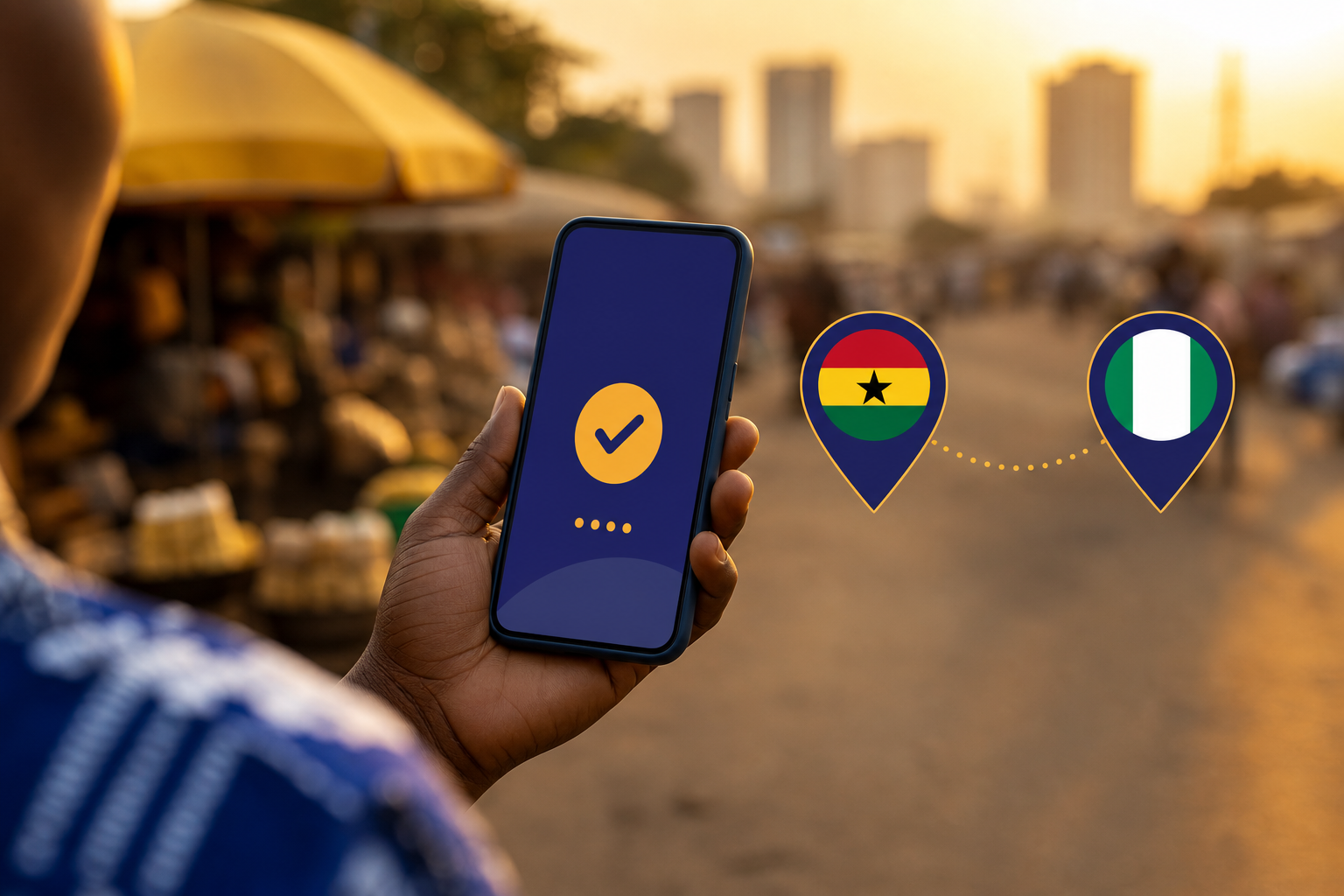
Most healthcare software built in the United States or Western Europe starts with the same assumption: patients and families will pay with insurance or a credit card.
That assumption shapes the product from the beginning. The billing module integrates with Stripe. The patient portal collects card information. The payment plan flow asks for a card on file.
Payments are tracked and reconciled around card transactions.
In Ghana, Nigeria, Kenya, and many other markets, people often pay for care through mobile money, cash, or local payment networks.
When healthcare software is designed only around cards and insurance, it misses how payment actually happens in those settings.
How people pay for care in Ghana
Ghana has one of the highest mobile money adoption rates in the world. Many people use more than one mobile money provider, and the dominant networks include MTN MoMo, Telecel Cash, and AirtelTigo Cash.
Mobile money is part of everyday life. People use it to send money, pay bills, run small businesses, and pay for services, including healthcare.
In many communities, it is more familiar and more practical than paying with a credit card.
Credit card use is much lower. Debit cards are more common, but they still tend to serve a smaller urban middle class.
A patient walking into a clinic in Kumasi or Tamale is much more likely to pay with mobile money or cash than with a Visa card.
This has been the dominant pattern for over a decade.
Healthcare software that treats card payments as the default misses how many patients and families already manage money.
How MyNursePal approaches payments
When we started designing the MyNursePal Pro billing engine, we made mobile money part of the core payment architecture from the beginning.
A payment record in MyNursePal Pro can come from a card charge, a mobile money payment, a bank transfer, a cash payment with reconciliation, or a government scheme remittance.
The accounting flow can work across those payment sources instead of being tied to one method.
We also designed for provider-specific integrations. MTN MoMo, M-Pesa, AirtelTigo Cash, and Telecel each have their own requirements, authentication flows, and transaction patterns.
Supporting them properly takes real engineering work.
The patient-facing experience also changes by region. A patient in Boston may see card payment options. A patient in Accra may see MTN MoMo, Telecel Cash, or AirtelTigo Cash. A patient in Nairobi may see M-Pesa.
The platform surfaces the payment options that fit the patient’s location.
For many of the markets we serve, mobile money is the default way people pay.
Why we made this decision early
Many healthtech companies start with one market, design around that market’s assumptions, and try to expand later.
By then, the architecture can be hard to change.
We made a different decision. We wanted MyNursePal Pro to support global markets from the beginning, so payments had to be flexible from the beginning.
That means Stripe is one payment provider among several.
Mobile money, local currency, language, date formats, payment options, and jurisdiction-specific requirements are part of the same product foundation.
This allows the same care delivery platform to support a clinic in Ghana and an organization in Boston, with the right local settings in place.
The care workflows, patient information, billing flow, and coordination stay connected, while the payment defaults and compliance requirements adjust by market.
What this taught us about global care delivery
The mobile money decision shaped how we think about the rest of the platform.
Network conditions vary. A clinic in rural Northern Ghana may work with intermittent connectivity, while a hospital in Boston may rely on a high-speed network.
The same care workflows need to keep moving in both settings, so offline-ready design has to be part of the product.
Language support has to be part of the core product. Twi, Hausa, Yoruba, Swahili, and other languages are first languages for millions of healthcare workers and patients.
A global care delivery platform should support language needs inside the workflow, rather than treating translation as an afterthought.
Regulatory requirements vary by country. Ghana’s Data Protection Act, Nigeria’s NDPR, UK GDPR, and HIPAA each create different obligations.
MyNursePal Pro needs configurable consent and data-handling settings that can fit the jurisdiction where care is delivered.
Care workflows also vary across markets.
High-volume walk-in clinics, specimen drop-offs without appointments, family-based care decisions, and mobile-first provider workflows are common in many countries.
These workflows need to be supported directly in the platform.
Building with local realities in mind
There are strong local healthcare technology companies in Ghana, Kenya, Nigeria, and other markets.
There are also global digital health companies doing meaningful work in lower-resource settings.
MyNursePal’s focus is to build enterprise-grade care delivery technology that can work for a large hospital and also fit the needs of a smaller clinic.
The same platform can support different settings because it is configured around the market, the organization, and the way care is delivered.
Enterprise healthcare technology should reach more than markets built around cards, private insurance, and high-speed connectivity.
Where we go from here
We are continuing to add mobile money providers as we expand.
We are also adding support for national health insurance schemes and partnering with local fintech organizations where deeper integration is needed.
Every new payment method and locale strengthens the same idea: global healthcare software has to be designed around the markets it serves from the start.
The decisions made early in the architecture shape where the platform can work, who it can support, and how much friction patients and care teams face when they use it.

The MyNursePal Engineering Team
With Sylvia Abbeyquaye, PhD, MPA, RN
Writing from inside the work, healthcare, infrastructure, and the future of care.

